Autohaus Standard
A premium automotive website redesign focused on elevating vehicle presentation, strengthening trust, and optimizing the digital buying experience.
Autohaus Standard
A premium automotive website redesign focused on elevating vehicle presentation, strengthening trust, and optimizing the digital buying experience.
About
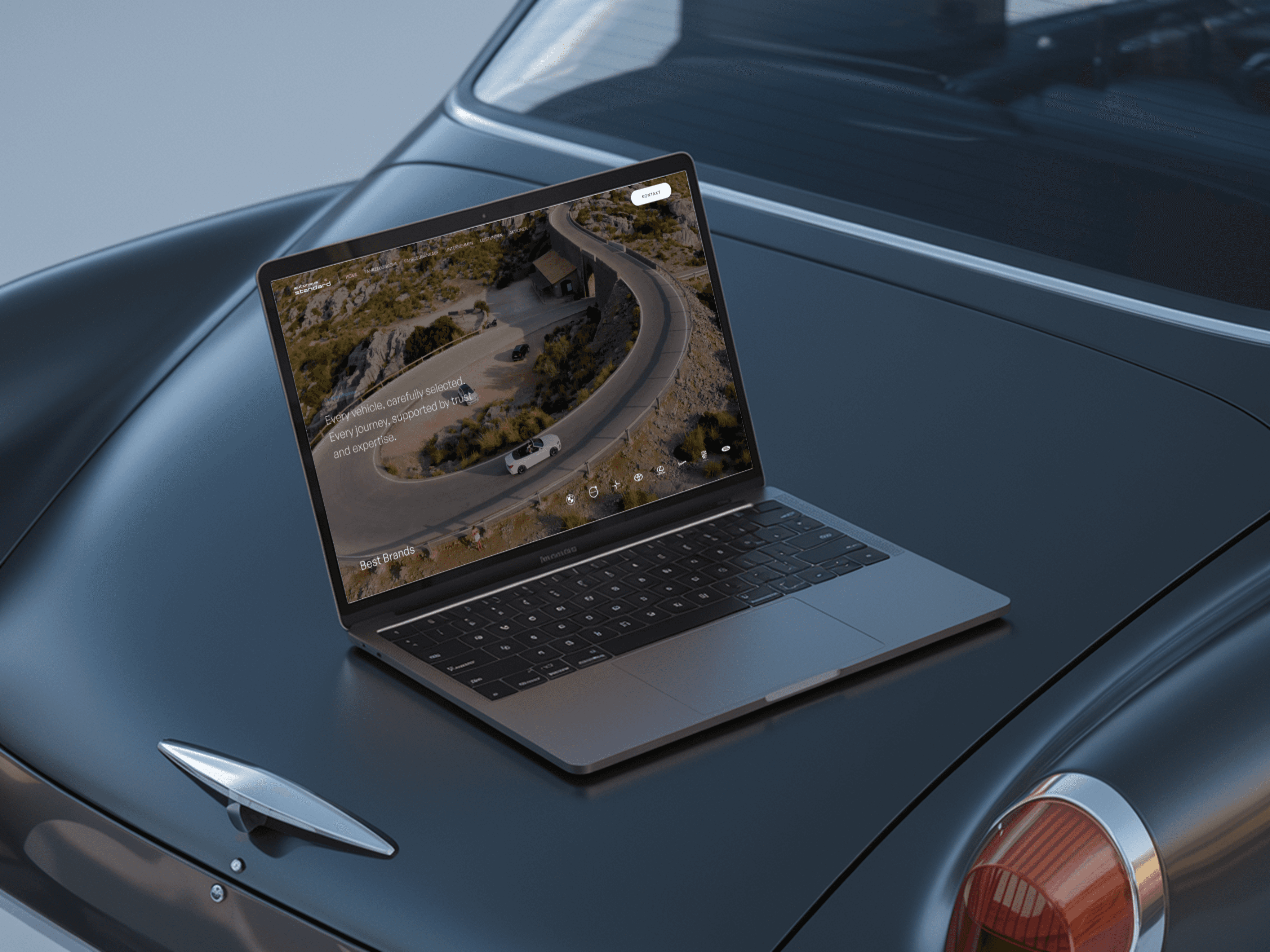
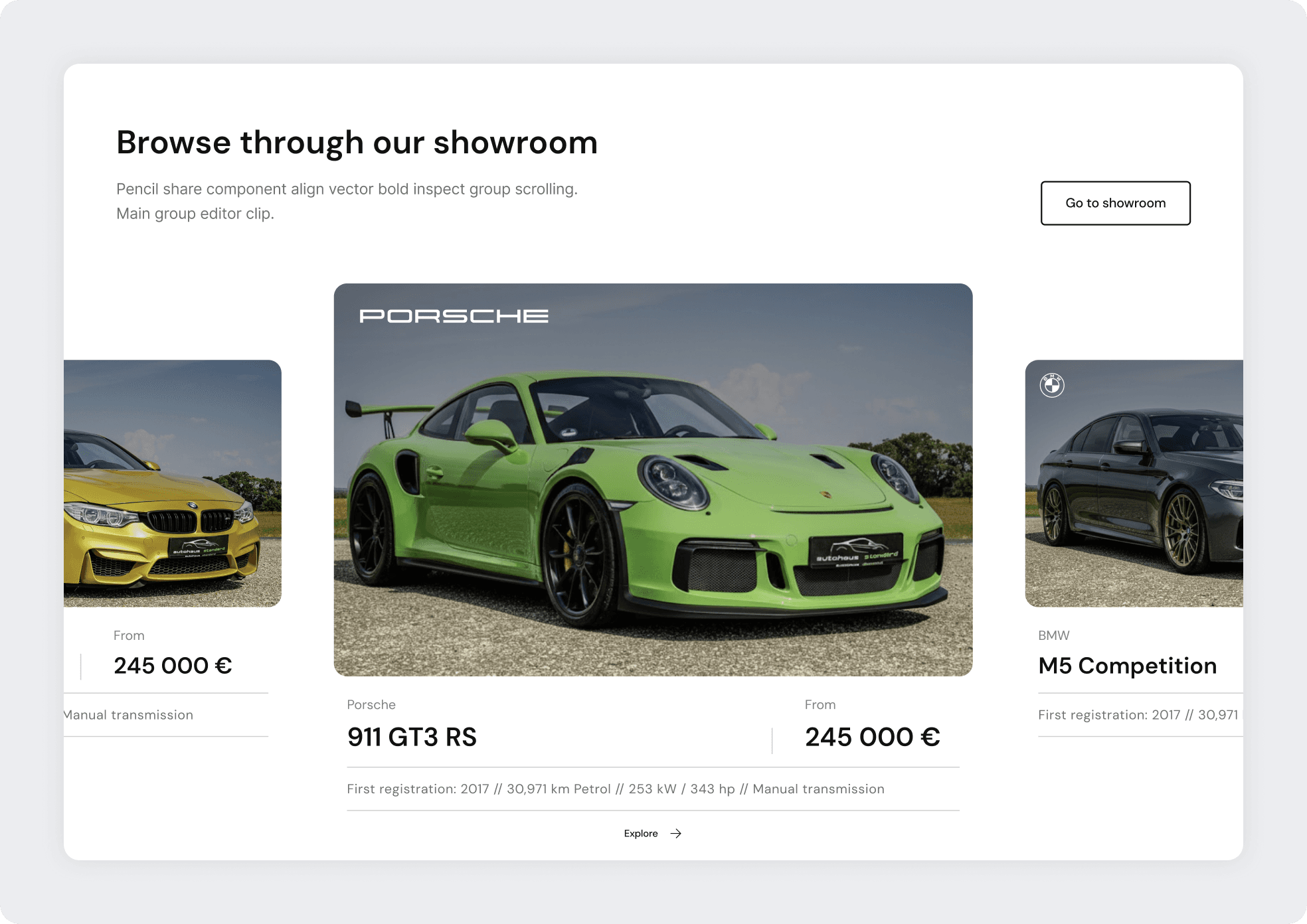
This project involved the redesign of a dealership website for Autohaus Standard, with the goal of modernizing the digital presence and improving the vehicle discovery experience. The objective was to create a premium and structured interface that reflects the quality of the vehicles while supporting lead generation and customer trust. The website was redesigned to highlight vehicle inventory, financing options, and dealership services in a clear and conversion oriented manner. Special attention was given to layout structure, visual hierarchy, and presentation of automotive content to ensure that browsing feels seamless and professional. The result is a refined automotive platform that balances strong visual impact with functional clarity.
Industry
Automotive
Automotive
Automotive
Automotive
Automotive
Type of work
Website Redesign
Website Redesign
Website Redesign
Website Redesign
Website Redesign
Timeline
3 Weeks
3 Weeks
3 Weeks
3 Weeks
3 Weeks
Challenges
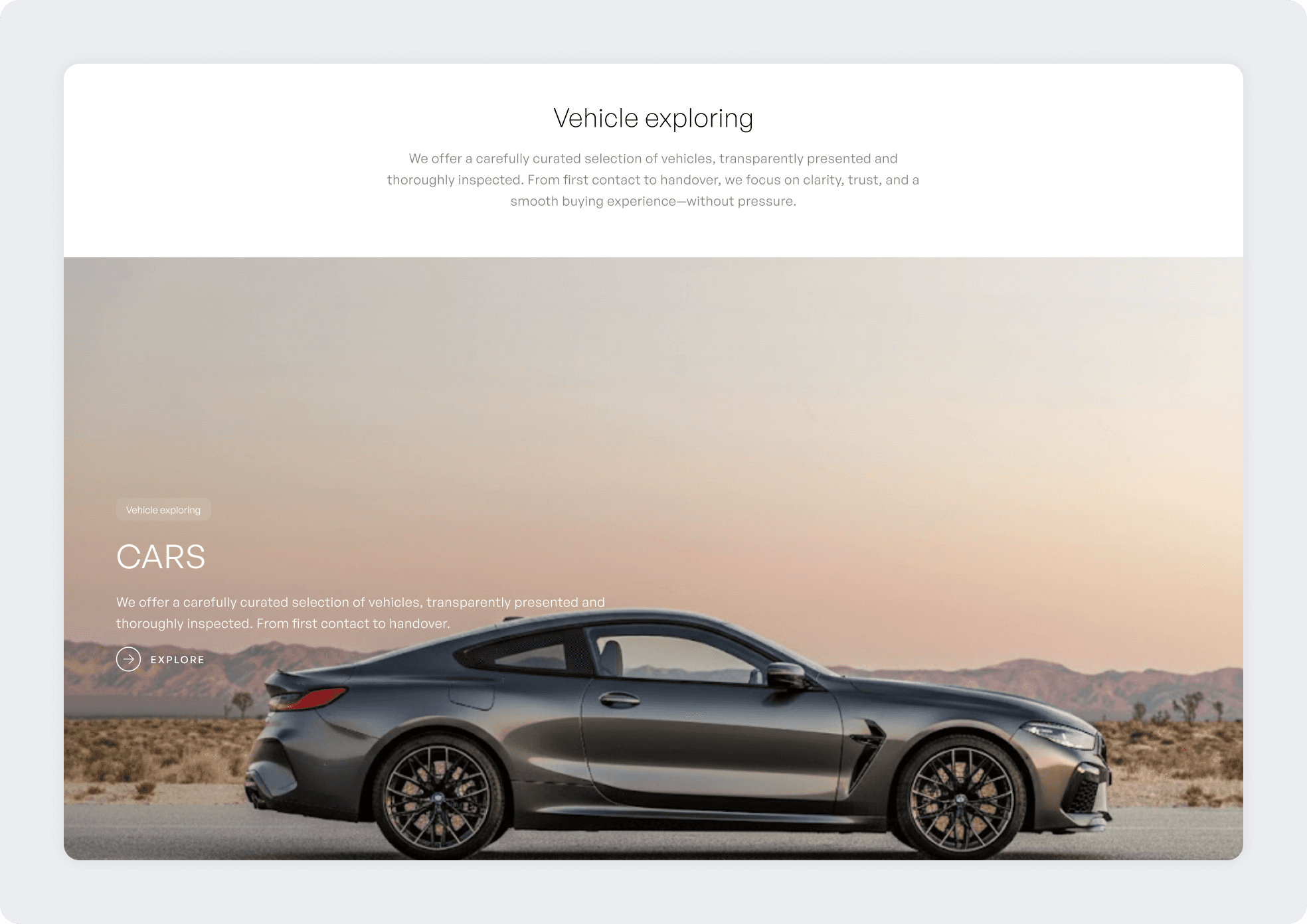
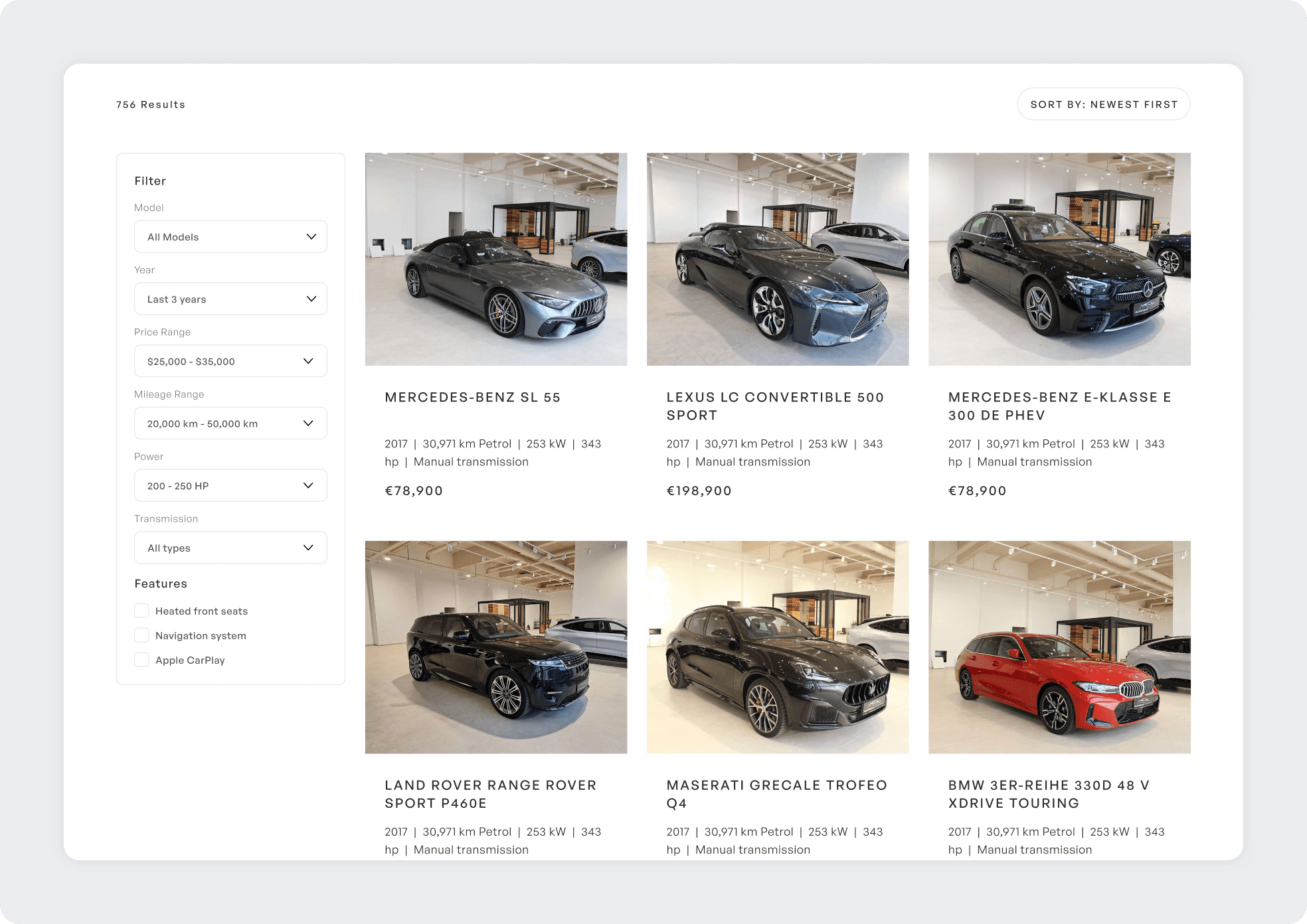
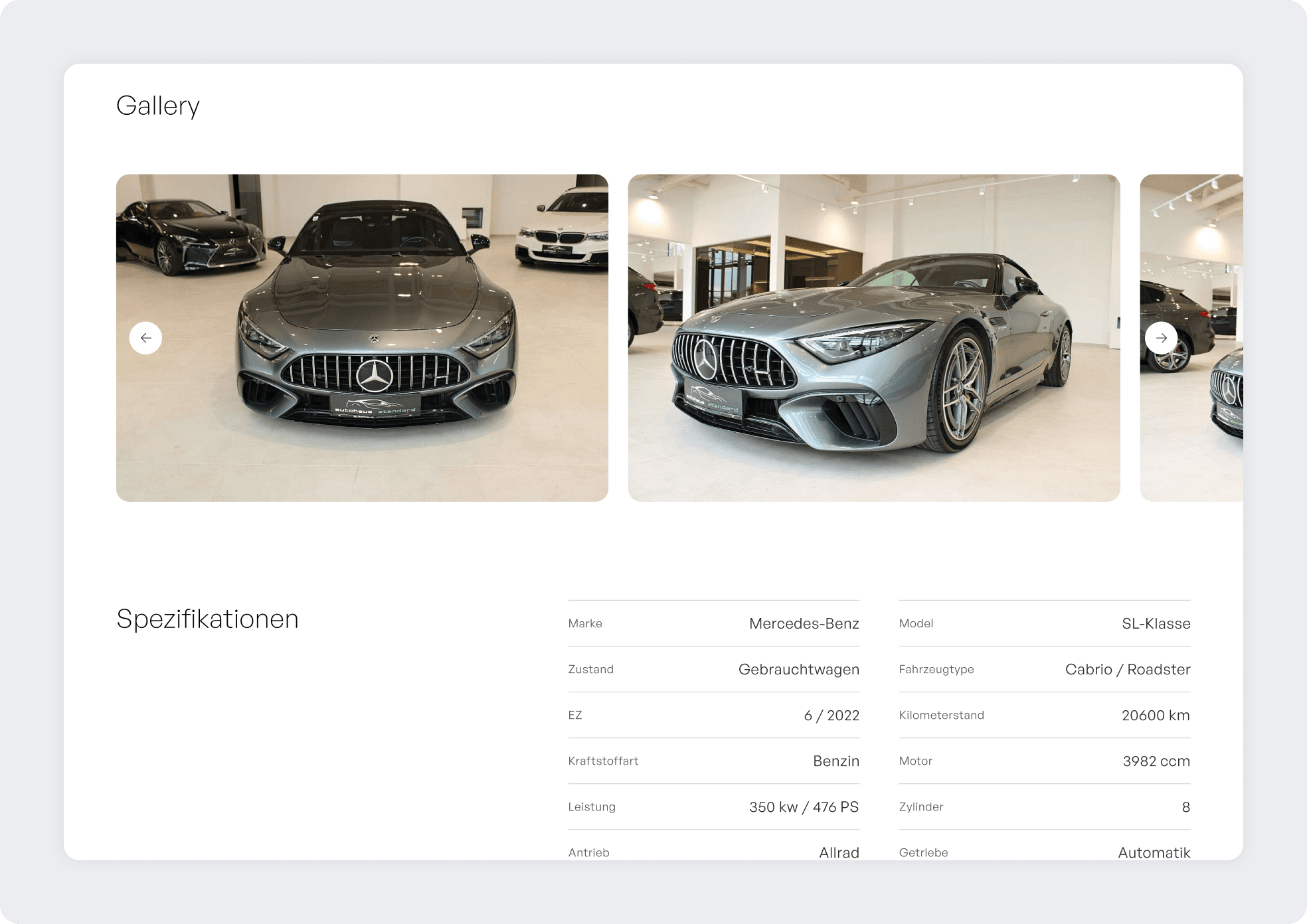
The main challenge was transforming a content heavy dealership website into a structured and modern digital experience. Automotive websites often contain extensive vehicle listings, filters, pricing variations, financing information, and service offerings, which can easily overwhelm users if not organized properly. Another challenge was presenting vehicle information in a way that feels premium while still being practical. Each car listing needed to display technical specifications, pricing details, and visual assets clearly without creating visual clutter. The filtering and browsing experience required intuitive structure to allow users to quickly narrow down their search. Trust was also a critical factor. Dealership websites must communicate credibility, transparency, and reliability. Pricing, vehicle condition, and service offerings needed to feel clear and honest to support decision making. Additionally, strong calls to action were necessary to guide users toward inquiry, appointment booking, or direct contact.
Challenges
The main challenge was transforming a content heavy dealership website into a structured and modern digital experience. Automotive websites often contain extensive vehicle listings, filters, pricing variations, financing information, and service offerings, which can easily overwhelm users if not organized properly. Another challenge was presenting vehicle information in a way that feels premium while still being practical. Each car listing needed to display technical specifications, pricing details, and visual assets clearly without creating visual clutter. The filtering and browsing experience required intuitive structure to allow users to quickly narrow down their search. Trust was also a critical factor. Dealership websites must communicate credibility, transparency, and reliability. Pricing, vehicle condition, and service offerings needed to feel clear and honest to support decision making. Additionally, strong calls to action were necessary to guide users toward inquiry, appointment booking, or direct contact.
Challenges
The main challenge was transforming a content heavy dealership website into a structured and modern digital experience. Automotive websites often contain extensive vehicle listings, filters, pricing variations, financing information, and service offerings, which can easily overwhelm users if not organized properly. Another challenge was presenting vehicle information in a way that feels premium while still being practical. Each car listing needed to display technical specifications, pricing details, and visual assets clearly without creating visual clutter. The filtering and browsing experience required intuitive structure to allow users to quickly narrow down their search. Trust was also a critical factor. Dealership websites must communicate credibility, transparency, and reliability. Pricing, vehicle condition, and service offerings needed to feel clear and honest to support decision making. Additionally, strong calls to action were necessary to guide users toward inquiry, appointment booking, or direct contact.
The process
The process began with restructuring the information architecture to prioritize vehicle inventory and key services. User flows were mapped around common customer actions such as browsing vehicles, comparing models, and submitting inquiries. Wireframes focused on creating a clean vehicle card system with clear pricing visibility and specification breakdowns. The filtering system was simplified to allow intuitive navigation between brands, models, fuel types, and price ranges. Visual hierarchy was strengthened through bold typography, structured spacing, and high impact imagery to emphasize the premium nature of the vehicles. Conversion elements such as contact buttons, financing inquiries, and booking options were strategically integrated across the platform. Responsive behavior was considered throughout the design to ensure a consistent browsing experience across desktop and mobile devices.
The process
The process began with restructuring the information architecture to prioritize vehicle inventory and key services. User flows were mapped around common customer actions such as browsing vehicles, comparing models, and submitting inquiries. Wireframes focused on creating a clean vehicle card system with clear pricing visibility and specification breakdowns. The filtering system was simplified to allow intuitive navigation between brands, models, fuel types, and price ranges. Visual hierarchy was strengthened through bold typography, structured spacing, and high impact imagery to emphasize the premium nature of the vehicles. Conversion elements such as contact buttons, financing inquiries, and booking options were strategically integrated across the platform. Responsive behavior was considered throughout the design to ensure a consistent browsing experience across desktop and mobile devices.
The process
The process began with restructuring the information architecture to prioritize vehicle inventory and key services. User flows were mapped around common customer actions such as browsing vehicles, comparing models, and submitting inquiries. Wireframes focused on creating a clean vehicle card system with clear pricing visibility and specification breakdowns. The filtering system was simplified to allow intuitive navigation between brands, models, fuel types, and price ranges. Visual hierarchy was strengthened through bold typography, structured spacing, and high impact imagery to emphasize the premium nature of the vehicles. Conversion elements such as contact buttons, financing inquiries, and booking options were strategically integrated across the platform. Responsive behavior was considered throughout the design to ensure a consistent browsing experience across desktop and mobile devices.
The outcome
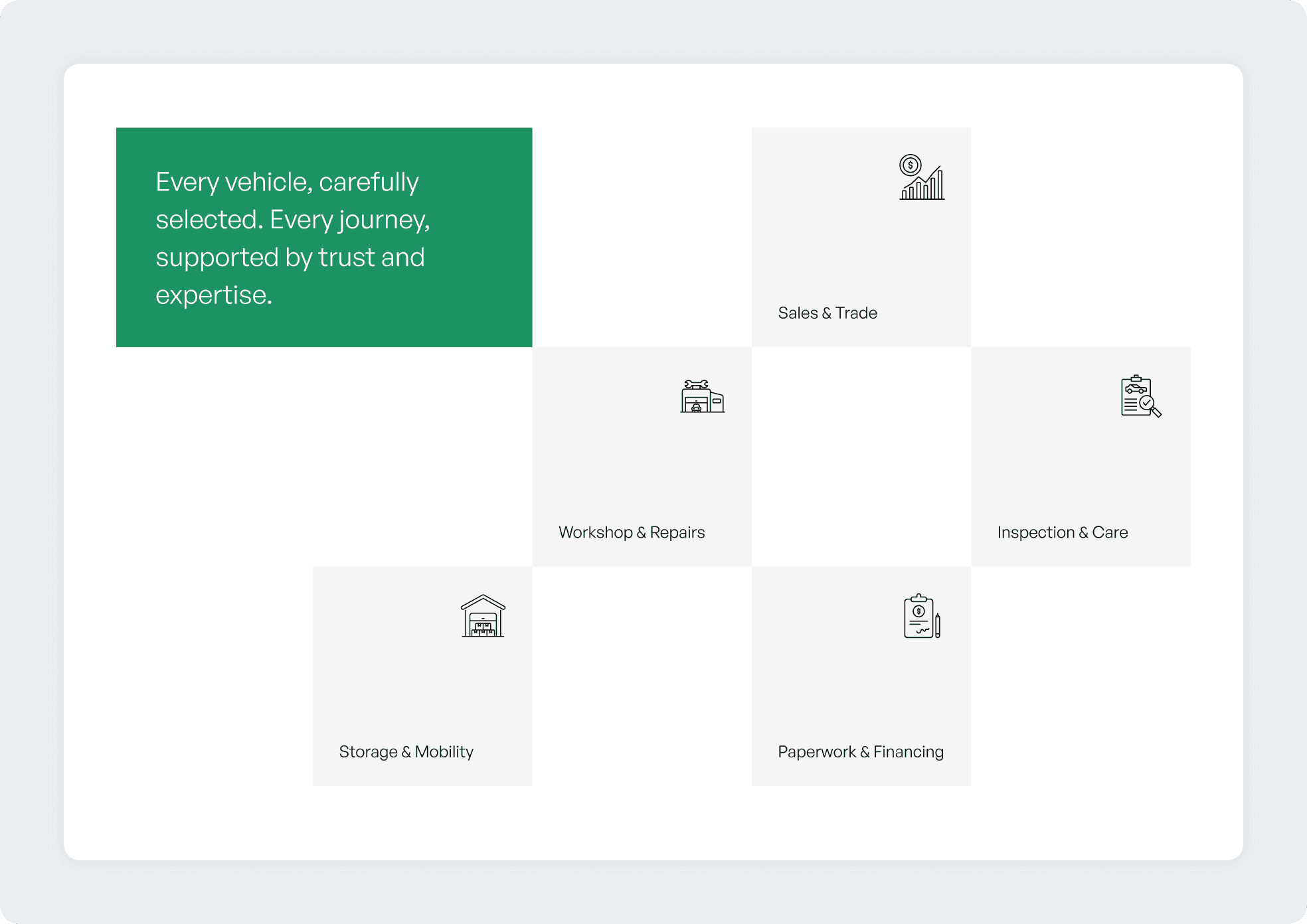
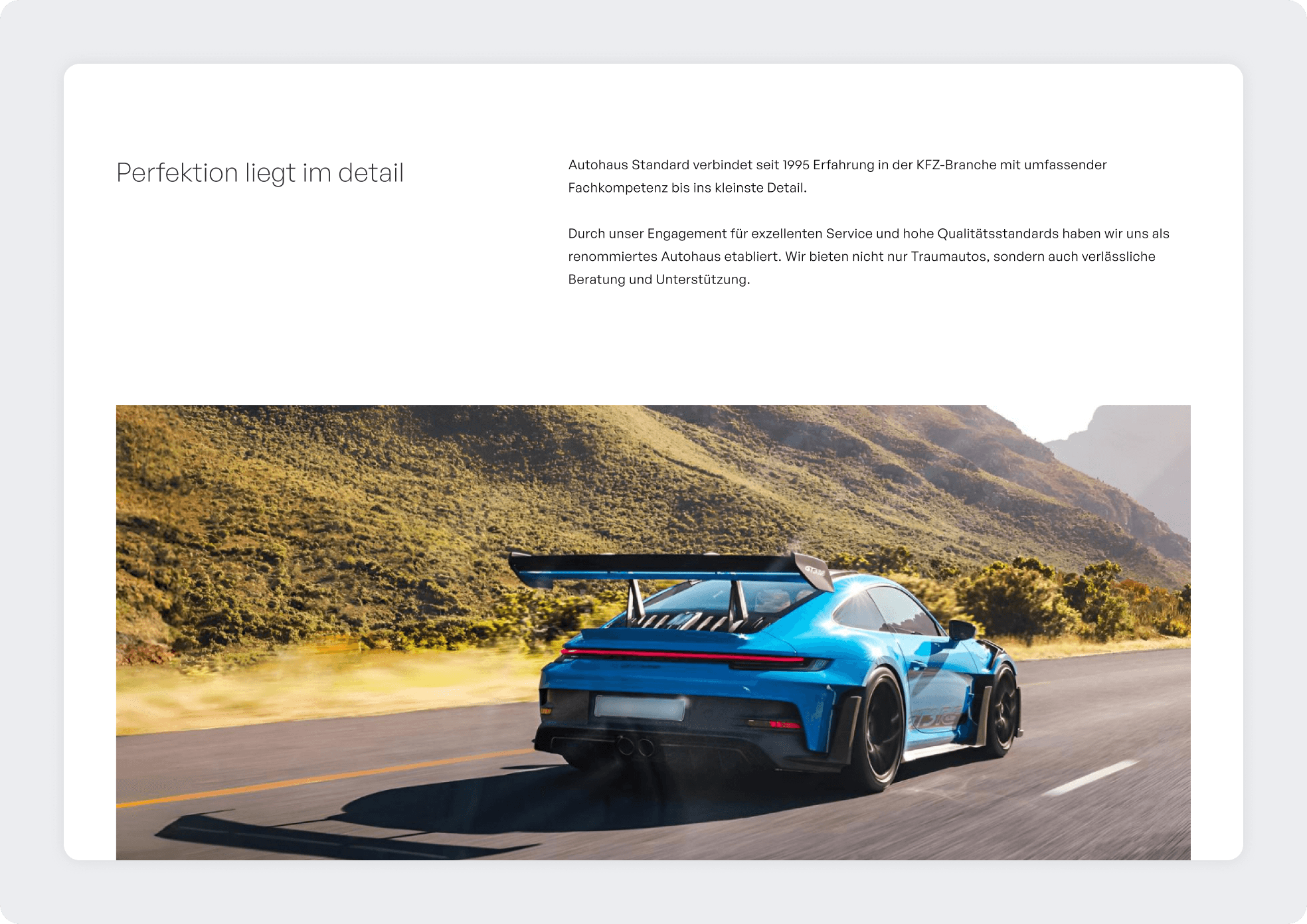
The final result is a modern and conversion focused automotive website that enhances vehicle presentation and improves the overall user journey. The redesign strengthens brand perception while simplifying navigation through complex inventory structures. Autohaus Standard now benefits from a clearer digital presence that supports customer trust, increases engagement with vehicle listings, and encourages direct inquiries.
The outcome
The final result is a modern and conversion focused automotive website that enhances vehicle presentation and improves the overall user journey. The redesign strengthens brand perception while simplifying navigation through complex inventory structures. Autohaus Standard now benefits from a clearer digital presence that supports customer trust, increases engagement with vehicle listings, and encourages direct inquiries.
The outcome
The final result is a modern and conversion focused automotive website that enhances vehicle presentation and improves the overall user journey. The redesign strengthens brand perception while simplifying navigation through complex inventory structures. Autohaus Standard now benefits from a clearer digital presence that supports customer trust, increases engagement with vehicle listings, and encourages direct inquiries.