E.G.E.S
A strategic website redesign for a renewable energy company, transforming complex technical services into a clear, structured, and conversion-driven digital experience, including a custom solar configurator for instant project estimation.
E.G.E.S
A strategic website redesign for a renewable energy company, transforming complex technical services into a clear, structured, and conversion-driven digital experience, including a custom solar configurator for instant project estimation.
About
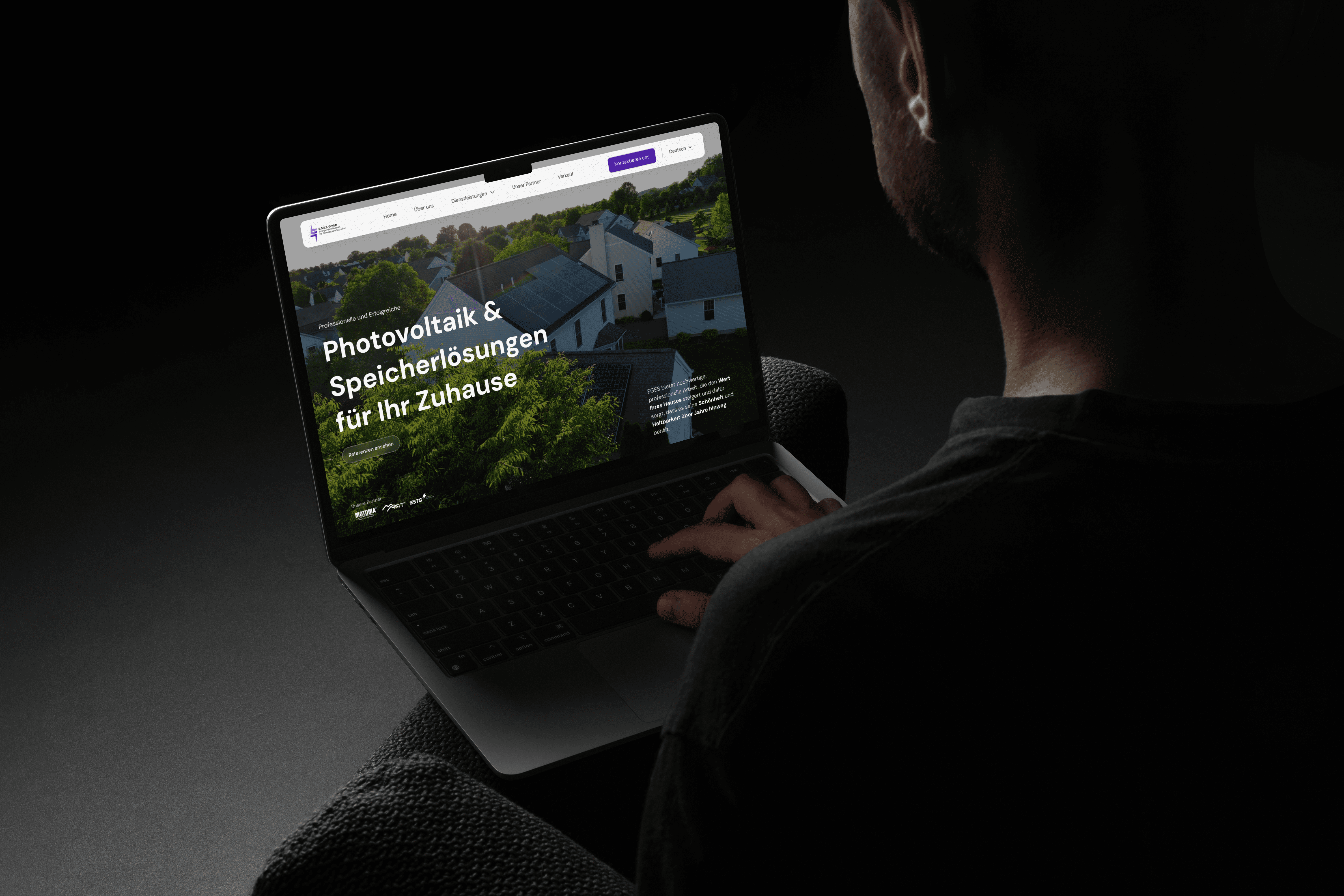
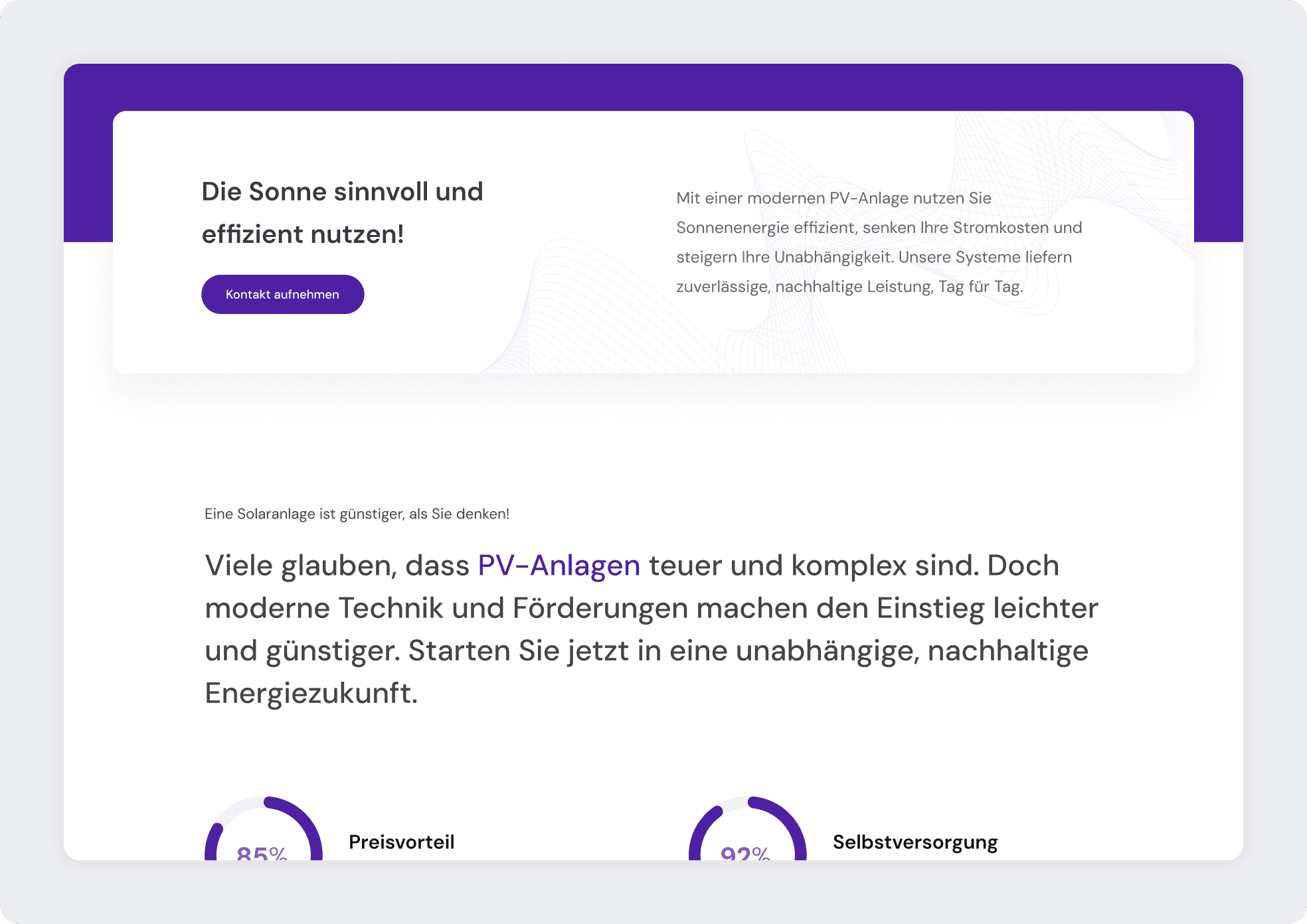
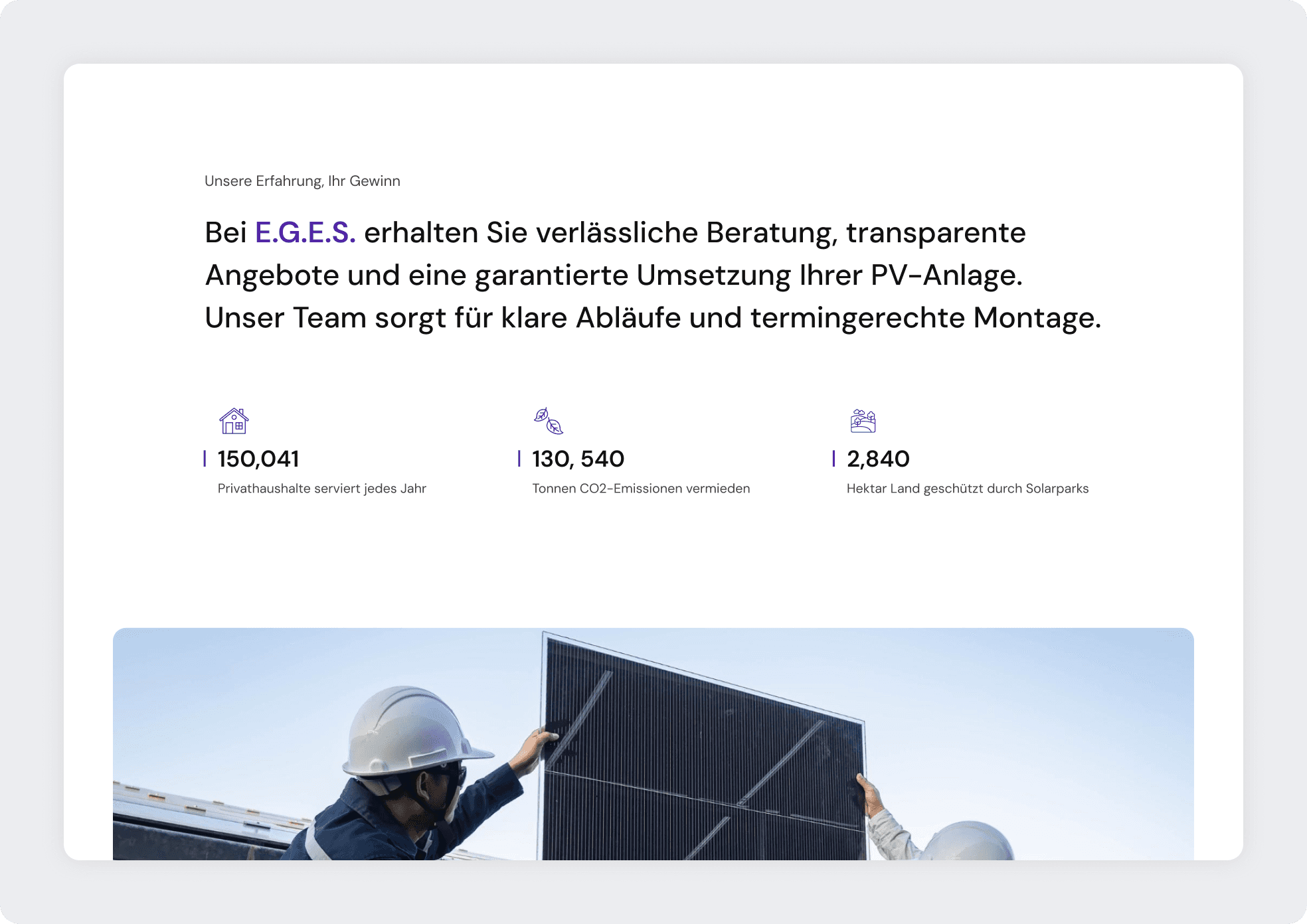
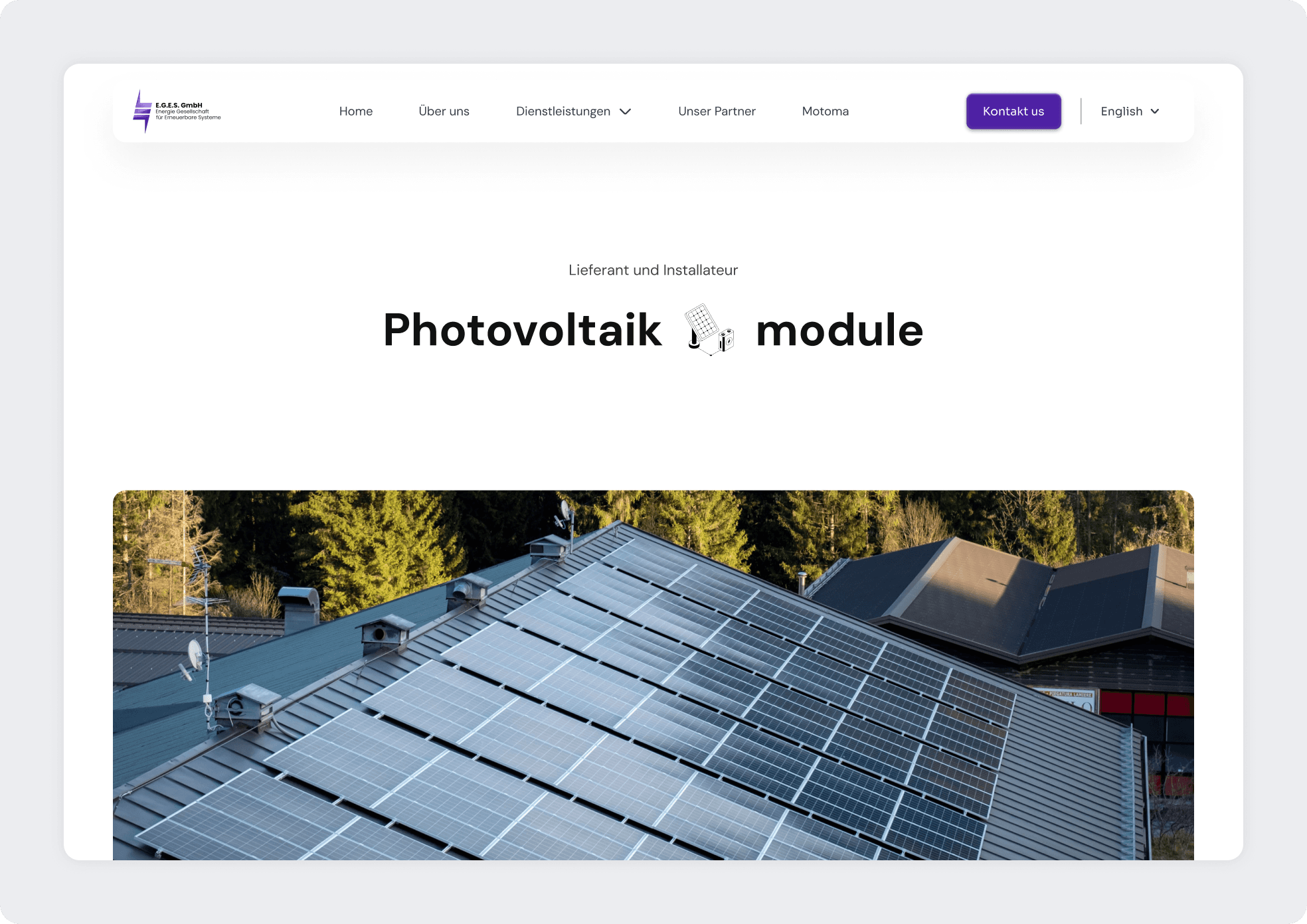
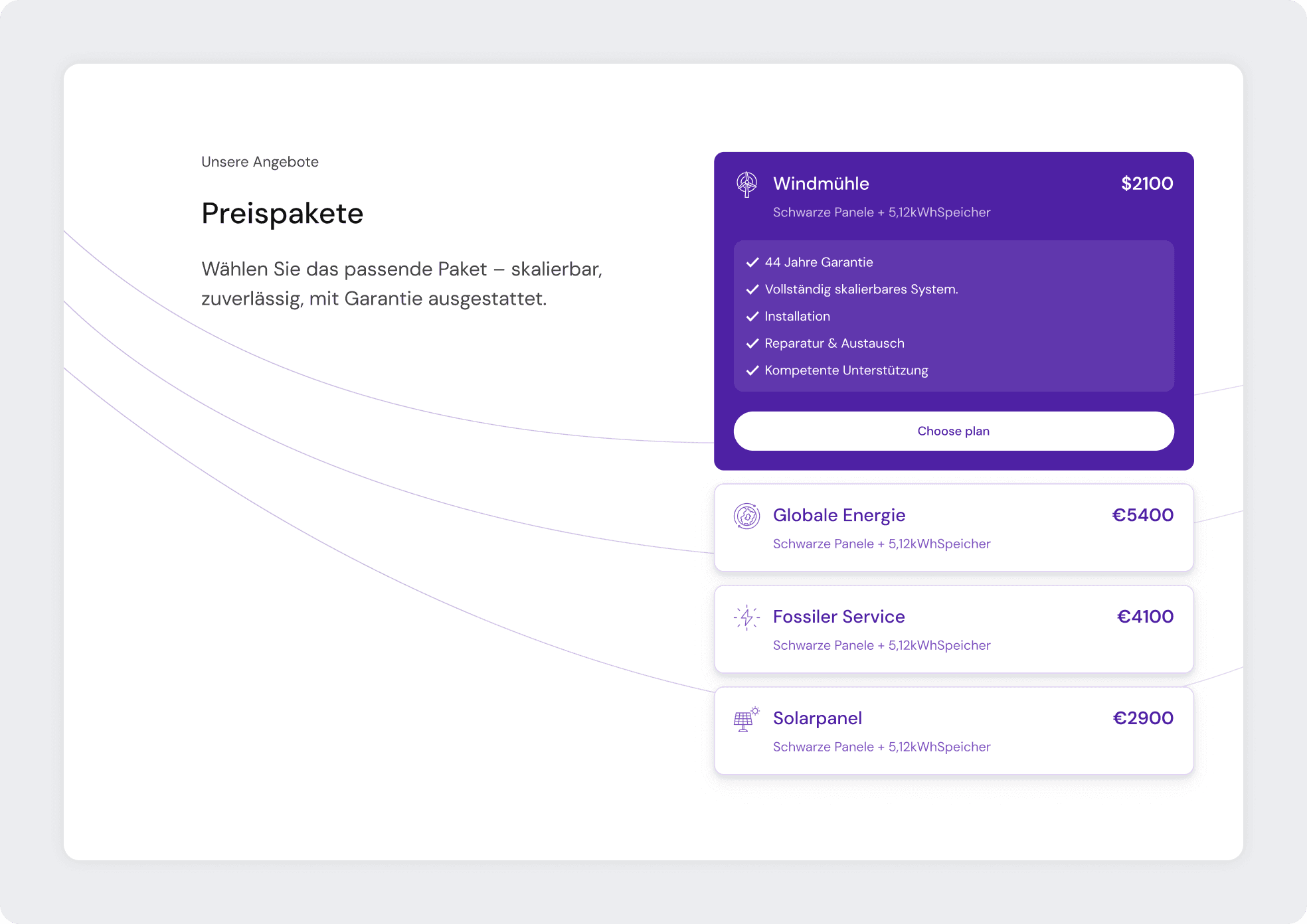
This project involved a complete redesign of the EGES website, a company specializing in solar systems and renewable energy solutions. The objective was to modernize the digital presence while transforming complex engineering services into a structured and user-friendly experience. Beyond visual improvement, the redesign focused on clarity, scalability, and lead generation. The platform was rebuilt with a stronger information architecture, improved service segmentation, and a strategic user flow guiding visitors from awareness to inquiry. A key component of the project was the development of an interactive solar configurator, allowing users to calculate an estimated system size and potential output based on their house type and roof dimensions. The result is a modern digital platform that communicates technical expertise while remaining accessible to a broad audience.
Industry
Renewable Energy
Renewable Energy
Renewable Energy
Renewable Energy
Renewable Energy
Type of work
Website Redesign
Website Redesign
Website Redesign
Website Redesign
Website Redesign
Timeline
5 Weeks
5 Weeks
5 Weeks
5 Weeks
5 Weeks
Challenges
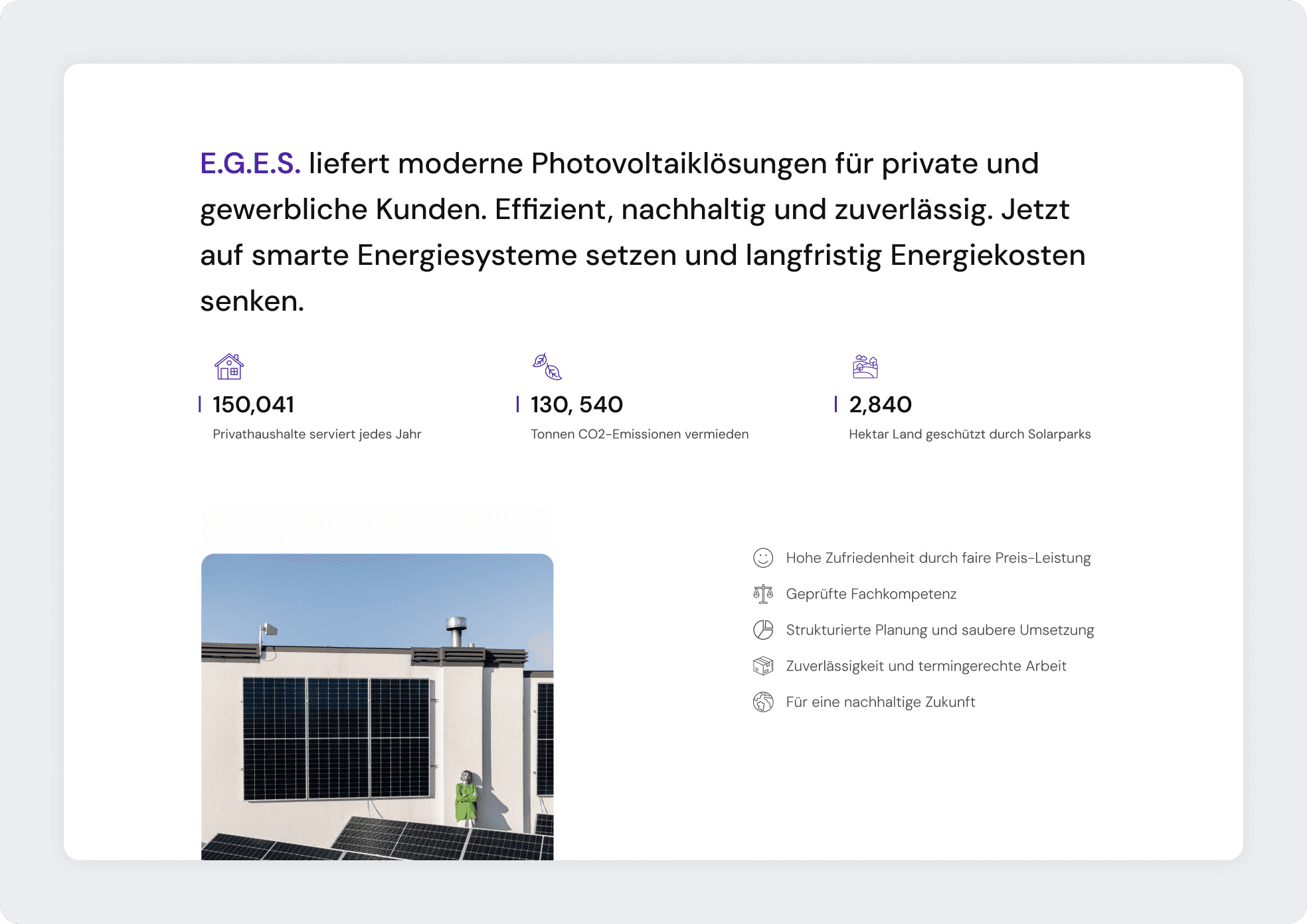
The main challenge was translating highly technical renewable energy systems into a format that feels clear, digestible, and trustworthy. The previous website lacked hierarchy, making it difficult for users to understand the services, process, and benefits of solar installations. Another significant challenge was balancing two different target groups: technically informed users seeking detailed system specifications and private homeowners who required simplified explanations and reassurance. Complex engineering terminology, installation processes, and regulatory information needed to be structured in a way that reduced cognitive overload without oversimplifying the subject matter. Additionally, the website lacked interactive elements that could actively engage users or help them understand the financial and practical implications of installing a solar system. There was no clear conversion path, and the user journey did not naturally guide visitors toward inquiry or consultation.
Challenges
The main challenge was translating highly technical renewable energy systems into a format that feels clear, digestible, and trustworthy. The previous website lacked hierarchy, making it difficult for users to understand the services, process, and benefits of solar installations. Another significant challenge was balancing two different target groups: technically informed users seeking detailed system specifications and private homeowners who required simplified explanations and reassurance. Complex engineering terminology, installation processes, and regulatory information needed to be structured in a way that reduced cognitive overload without oversimplifying the subject matter. Additionally, the website lacked interactive elements that could actively engage users or help them understand the financial and practical implications of installing a solar system. There was no clear conversion path, and the user journey did not naturally guide visitors toward inquiry or consultation.
Challenges
The main challenge was translating highly technical renewable energy systems into a format that feels clear, digestible, and trustworthy. The previous website lacked hierarchy, making it difficult for users to understand the services, process, and benefits of solar installations. Another significant challenge was balancing two different target groups: technically informed users seeking detailed system specifications and private homeowners who required simplified explanations and reassurance. Complex engineering terminology, installation processes, and regulatory information needed to be structured in a way that reduced cognitive overload without oversimplifying the subject matter. Additionally, the website lacked interactive elements that could actively engage users or help them understand the financial and practical implications of installing a solar system. There was no clear conversion path, and the user journey did not naturally guide visitors toward inquiry or consultation.
The process
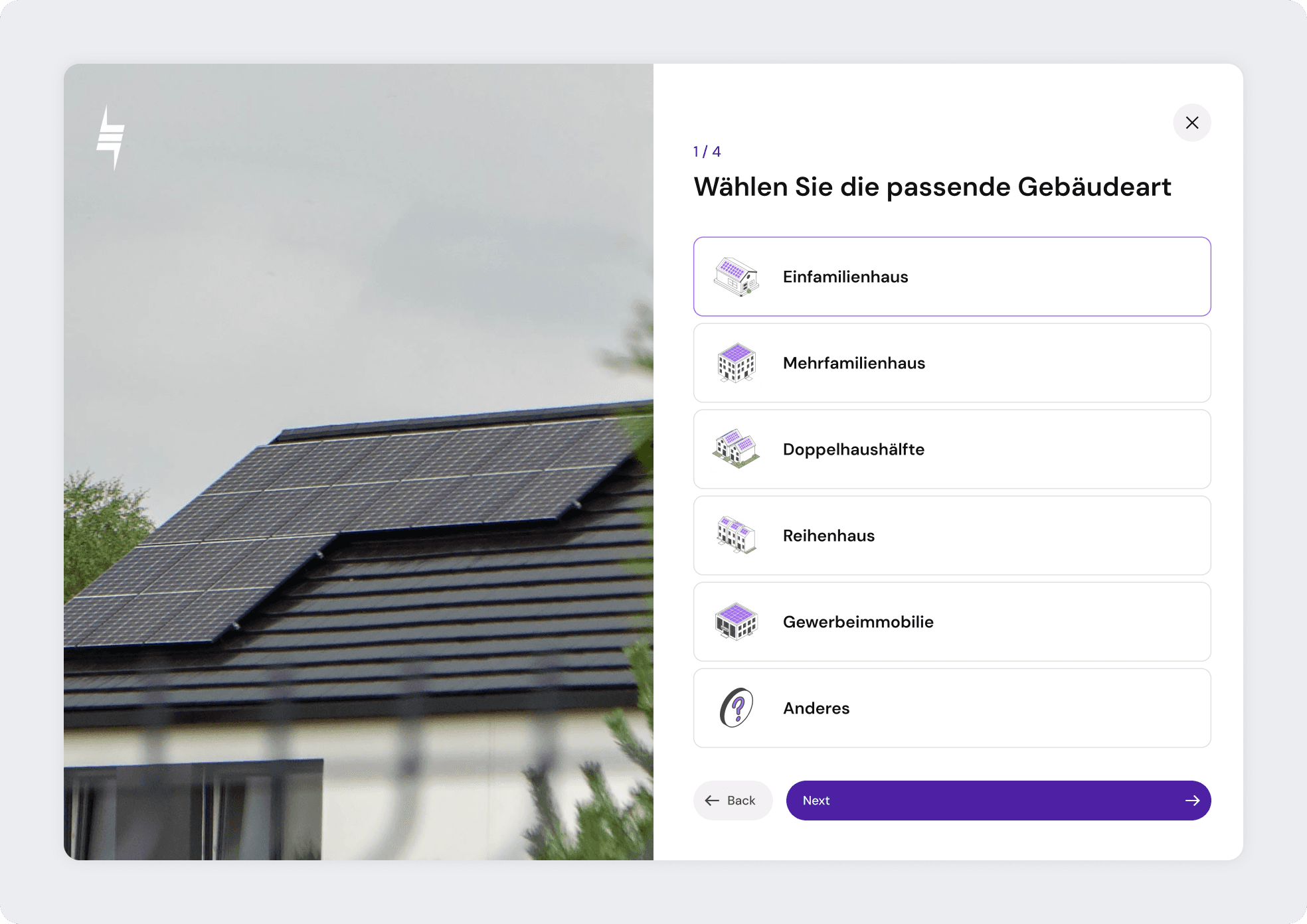
The process began with a complete restructuring of the information architecture to create logical navigation, clear service breakdowns, and improved content hierarchy. User flows were mapped to ensure visitors could quickly understand the company’s expertise, explore solutions, and take action. Wireframes were developed with a modular structure, allowing technical information to be segmented into digestible sections supported by clear typography and visual rhythm. The interface design focused on professionalism, precision, and sustainability, using clean layouts and structured spacing to reflect the engineering nature of the brand. A central solution was the integration of a solar configurator. This interactive tool allows users to input details about their property, including roof size and type, in order to receive an estimated system configuration and potential output. This feature not only increases engagement but also shortens the decision-making process by giving users immediate, personalized insights. Conversion points were strategically placed throughout the website, supported by clear calls to action and a simplified contact process.
The process
The process began with a complete restructuring of the information architecture to create logical navigation, clear service breakdowns, and improved content hierarchy. User flows were mapped to ensure visitors could quickly understand the company’s expertise, explore solutions, and take action. Wireframes were developed with a modular structure, allowing technical information to be segmented into digestible sections supported by clear typography and visual rhythm. The interface design focused on professionalism, precision, and sustainability, using clean layouts and structured spacing to reflect the engineering nature of the brand. A central solution was the integration of a solar configurator. This interactive tool allows users to input details about their property, including roof size and type, in order to receive an estimated system configuration and potential output. This feature not only increases engagement but also shortens the decision-making process by giving users immediate, personalized insights. Conversion points were strategically placed throughout the website, supported by clear calls to action and a simplified contact process.
The process
The process began with a complete restructuring of the information architecture to create logical navigation, clear service breakdowns, and improved content hierarchy. User flows were mapped to ensure visitors could quickly understand the company’s expertise, explore solutions, and take action. Wireframes were developed with a modular structure, allowing technical information to be segmented into digestible sections supported by clear typography and visual rhythm. The interface design focused on professionalism, precision, and sustainability, using clean layouts and structured spacing to reflect the engineering nature of the brand. A central solution was the integration of a solar configurator. This interactive tool allows users to input details about their property, including roof size and type, in order to receive an estimated system configuration and potential output. This feature not only increases engagement but also shortens the decision-making process by giving users immediate, personalized insights. Conversion points were strategically placed throughout the website, supported by clear calls to action and a simplified contact process.
The outcome
The final result is a structured, modern, and conversion-oriented digital platform that clearly communicates EGES’s expertise in renewable energy systems. Complex technical content is now presented in a clear and accessible manner, while the integrated configurator transforms passive visitors into actively engaged prospects. The redesign strengthens brand credibility, improves usability, and establishes a scalable foundation for future digital growth and lead generation.
The outcome
The final result is a structured, modern, and conversion-oriented digital platform that clearly communicates EGES’s expertise in renewable energy systems. Complex technical content is now presented in a clear and accessible manner, while the integrated configurator transforms passive visitors into actively engaged prospects. The redesign strengthens brand credibility, improves usability, and establishes a scalable foundation for future digital growth and lead generation.
The outcome
The final result is a structured, modern, and conversion-oriented digital platform that clearly communicates EGES’s expertise in renewable energy systems. Complex technical content is now presented in a clear and accessible manner, while the integrated configurator transforms passive visitors into actively engaged prospects. The redesign strengthens brand credibility, improves usability, and establishes a scalable foundation for future digital growth and lead generation.